COVID-19 vaccination’s effect on pregnant individuals and their newborns
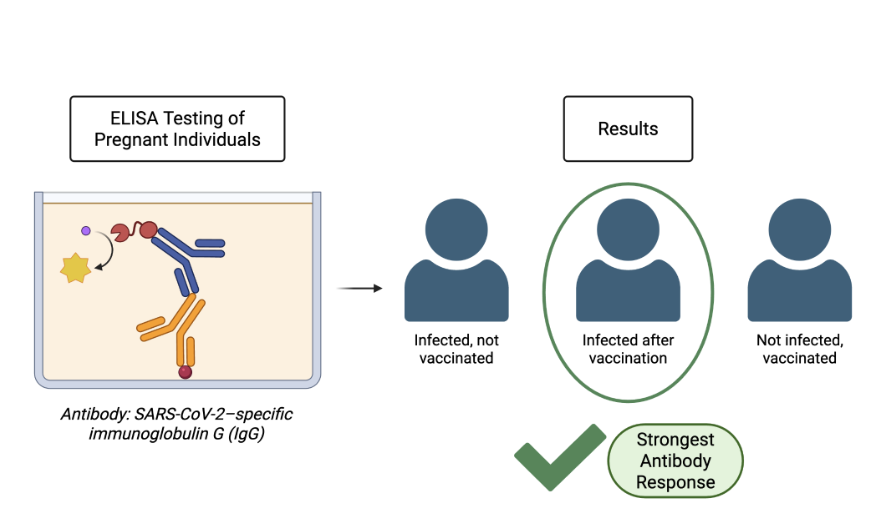
ELISA testing is used to measure COVID-19 lgG antibodies in pregnant individuals. The test compares antibody responses across groups, where individuals who were infected after vaccination showed the strongest antibody response compared to individuals who were infected
or only vaccinated.
Written by Lucy Zhu, Schematic by Lexi Bean
What is this study about?
Pregnant individuals are more at risk for complications due to pregnancy-related physiological and immunological changes, while newborns face risk because of the immaturity of their immune system. Common infections that have been observed include the flu, whooping cough, and COVID-19. Unlike the flu and whooping cough, COVID-19 evolves rapidly. With new variants emerging and evading existing immunity, protection during pregnancy continues to be an ongoing challenge. To understand immune protection during pregnancy, Dr. Messaoudi and colleagues studied how antibodies against COVID-19 are transferred from the mother to the infant.
How was this study conducted?
Collecting Maternal COVID-19 Specific Antibodies
The study used a total of 165 pregnant individuals enrolled at Oregon Health & Science University. Participants were split into three groups based on their infection and vaccination status:
Mothers who were infected but not vaccinated
Pregnant individuals who experienced an infection after vaccination
Mothers who were vaccinated but not infected
Researchers then measured COVID-19 specific antibodies called IgG (Immunoglobulin) that target the virus’s receptor-binding domain (RBD), which is what the virus uses to enter human cells. Samples were collected from the mother's breastmilk and blood using ELISA testing.
Comparing Maternal and Newborn Antibodies
After birth, the babies were assessed based on their mothers’ infection and vaccination history. The team then collected samples from the newborn's umbilical cord blood and analyzed the samples using ELISA testing to measure the concentration of COVID-19 IgG following infection or vaccination. The results were compared to what they saw in their mothers.
What was discovered?
Their data suggests that vaccinated mothers who had COVID during pregnancy had a stronger defense (better immune tolerance) against the virus compared to the other groups.
They also saw that newborns from vaccinated mothers had the highest newborn-to-maternal ratio of RBD-specific IgG relative to infants born to infected or unvaccinated mothers.
Moving forward, this highlights the importance of improving vaccination strategies during pregnancy to maximize immunity in newborns. Being vaccinated during pregnancy allows protective antibodies to be passed through to the baby. Resources that could be beneficial towards vaccine strategies include prenatal counseling, community outreach, and accessible vaccination clinics.
A link to the full publication can be found here.